

December was the tenth month in the Roman calendar, but not the end of the calendar year (which was in March). It was, however, considered the last time of the year before the  designated monthless winter period, and became an opportunity for Romans throughout the Roman Empire to converge on the city of Rome for a month of festivities, which included a series of carnivals, theater performances, coliseum events, and banquets with friends, family, and professional acquaintances. Over the course of the month, there were specific observances meant to protect the livestock, the stored harvest, and the means of transportation (horses and mules), as well as rituals hoping to insure positive business dealings in the future. There was widespread acknowledgement honoring the Earth Goddess, and the month of celebration ended honoring the Sun God, Sol Invictus, on the winter solstice, 25 December in the Julian calendar. designated monthless winter period, and became an opportunity for Romans throughout the Roman Empire to converge on the city of Rome for a month of festivities, which included a series of carnivals, theater performances, coliseum events, and banquets with friends, family, and professional acquaintances. Over the course of the month, there were specific observances meant to protect the livestock, the stored harvest, and the means of transportation (horses and mules), as well as rituals hoping to insure positive business dealings in the future. There was widespread acknowledgement honoring the Earth Goddess, and the month of celebration ended honoring the Sun God, Sol Invictus, on the winter solstice, 25 December in the Julian calendar.
In the northern hemisphere, the month known as December has always been associated with the winter solstice, when the Sun's position in the sky is at its greatest distance.  Although the Solstice lasts only an instant, the term is used to refer to the full 24-hour period, generally 21 December in the Gregorian calendar, and for thousands of years has signified celebration for the return of the Sun to longer days. Although the Solstice lasts only an instant, the term is used to refer to the full 24-hour period, generally 21 December in the Gregorian calendar, and for thousands of years has signified celebration for the return of the Sun to longer days.
From the earliest known ancient cultures of neolithic times, to the basin of Egypt, to the northern Celts, the Middle East, and throughout Asia, as well as the North American continent, there remains evidence of winter solstice celebrations. A time when communities completed preparations for the long and cold months ahead, sharing bountiful feasts of what could not be stored, with a spirit of being reborn into a new year cycle as the Sun begins its journey back toward springtime. The development of Christianity during the 1st Century introduced the Christian celebration, which continued as a dominant influence on the future mood and cultural climate of December.
While some cultures have recognized the Winter Solstice as mid-winter, and others mark it as the beginning of winter, December continues as a holiday season, and has resulted in a cross-cultural recognition of all religious, secular, and family traditional observances and celebrations. Science has proven modern cultures still value the time of the Solstice. As the days grow shorter, the weather colder, and outdoor activity begains to wane, the season generally brings an emotional comfort, surrounded by the warmth of family and friends, decorations, special lighting, warm fires and feasting, can relieve winter blues and spark the human spirit to face the new year ahead.
|


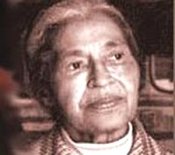 recognized as the "mother of the modern day civil rights movement" in America. Her refusal to surrender her seat to a white male passenger on a Montgomery, Alabama bus, on this day in 1955, which triggered a wave of protest that reverberated throughout the United States. An early activist in the effort to free the "Scottsboro Boys" (a celebrated case in the 1930s), Rosa and her husband became active with the NAACP, and her destiny lay as leader in the youth branch. After a move to Detroit, MI in 1957, she was employed by Congressman John Conyers 1st Congressional District of Michigan from 1965 to 1988. In February 1987, she co-founded, with Elaine Eason Steele, the Rosa and Raymond Parks Institute for Self Development in honor of her husband, Raymond (1903-1977), with the purpose to motivate and direct youth not targeted by other programs to achieve their highest potential. In her lifetime, she received more than 43 honorary doctorate degrees, hundreds of plaques, certificates, citations, awards and keys to many cities, including the NAACP's Spingarn Medal, the UAW's Social Justice Award, the Martin Luther King, Jr. Non-Violent Peace Prize, the US Medal of Feredom, the Ghandi, King, Ikeda award for peace, and the Congressional Gold Medal of Honor. Following her death, she became the first woman and only the second Black to lie in state in the Capitol rotunda, an honor reserved almost exclusively for federal officials who have held the highest offices.
 According to UN estimates, there are now over 40 million people living with HIV, including 3 million children. Almost half of all people who become infected with HIV do so before they are 25 and are killed by AIDS before they are 35. Although the greatest number of people with HIV/AIDS live in developing nations, HIV is a threat to men, women, and children on all continents around the world. Started in 1988, World AIDS Day is not just about raising money, but also about increasing awareness, fighting prejudice, and improving education. It is a day of recognition to raise awareness and understanding, and to remember the millions living with HIV or suffering because of AIDS.
 days until Christmas, and originally came to the United States from Germany. The 1st printed Advent Calendar was from a German named Gerhard Lang, whose calendar consisted of miniature colored pictures that would be attached to a piece of cardboard each day in December. Later Advent Calendars were made with little doors to open on each day. The German calendars were sold until World War II when production was stopped due to the war shortages. After the war, the production of calendars resumed in 1946, influenced by a newspaper article showing President Eisenhower and his grandchildren with The Little Town Advent Calendar.
 Reorganization Plan No. 3, signed into law 9 July 1970 by President Richard Nixon, created the Environmental Protection Agency (EPA), which officially began operation on this day in 1970. Monitoring not only air, water, and soil quality, the EPA oversees the protection of endangered species, containment of hazardous waste products, researches fuel economy and greenhouse gas emissions, and the effects of pollution creating global warming. Consisting of a staff including engineers, scientists, and environmental protection specialists; as well as legal, public affairs, financial, and computer specialists, the agency is responsible for conducting environmental assessment and research, setting and enforcing national standards, and recommend the environmental policies of the United States.
 Remembering Alexander Haig
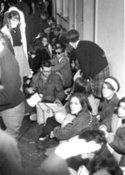 campus administration building) as a last resort in order to peacefully re-open negotiations with the administration.
 T'ašunka Witko, better known as Crazy Horse was a respected member of the Oglala Sioux Native American tribe of North Dakota. Noted for his courage in battle, he was recognized among his own people as a great leader committed to preserving the traditions and values of the Lakota way of life, and for leading his people into a war against the takeover of their lands by the Federal government of the United States. An honored warrior from the time he was 18, by 1865 he had been named war leader of his tribe. Able to devise successful strategies against his enemies, he is best known for leading the organization of troops that participated in the Battle of Little Big Horn on 25 June 1876. In January of 1877, his warriors fought their last major battle, the Battle of Wolf Mountain, with the US Cavalry in the Montana Territory. By 8 May of that year, knowing that his people were weakened by cold and hunger, Crazy Horse surrendered to US troops at Camp Robinson in Nebraska. His death came 5 September 1877 at Fort Robinson, with now controversial circumstances as to whether he was killed by a bayonet, or by his own knife. He died during the night in the Adjutant's Office, as his father sang the death song over him. His body was taken away by his parents and laid to rest somewhere in the Badlands.
The most exact record of his age came after his death, when his father told Lieutenant H. R. Lemly that his son "would soon have been thirty-seven, having been born on the South Cheyenne river in the fall of 1840."
T'ašunka Witko, better known as Crazy Horse was a respected member of the Oglala Sioux Native American tribe of North Dakota. Noted for his courage in battle, he was recognized among his own people as a great leader committed to preserving the traditions and values of the Lakota way of life, and for leading his people into a war against the takeover of their lands by the Federal government of the United States. An honored warrior from the time he was 18, by 1865 he had been named war leader of his tribe. Able to devise successful strategies against his enemies, he is best known for leading the organization of troops that participated in the Battle of Little Big Horn on 25 June 1876. In January of 1877, his warriors fought their last major battle, the Battle of Wolf Mountain, with the US Cavalry in the Montana Territory. By 8 May of that year, knowing that his people were weakened by cold and hunger, Crazy Horse surrendered to US troops at Camp Robinson in Nebraska. His death came 5 September 1877 at Fort Robinson, with now controversial circumstances as to whether he was killed by a bayonet, or by his own knife. He died during the night in the Adjutant's Office, as his father sang the death song over him. His body was taken away by his parents and laid to rest somewhere in the Badlands.
The most exact record of his age came after his death, when his father told Lieutenant H. R. Lemly that his son "would soon have been thirty-seven, having been born on the South Cheyenne river in the fall of 1840."
 Born on this day in 1835 Langar, England, Samuel Butler was a writer, painter, composer, philosopher, and amateur student. A non-conformist spirit born to a rigid Anglican family, following graduation from St John's College, Cambridge, Butler spent his youth adventuring in New Zealand. Exploring the South Island above the Rangitata not only left his name in places such as Butler Saddle, Mt Butler, and the Butler Range, but became the setting for his Utopian satire Erewhon, which was influential on future writers, including Huxley's Brave New World and Orwell's 1984. Philosophizing between the controversy of Darwin's new theories on evolution and conservative religious thought, Butler displayed through his works an idea of balance. He was also at the beginning of the industrial era, and was one of the first to conceive the idea that machines may someday evolve pass the capabilities of human potential.
 Recognized by the United Nations Forum on Forests, this day highlights survival of the world's forests, the biodiversity they embrace, and the hundreds of millions of people worldwide who depend on them. Initiated in 2010, this day also served as a bridge between the 2010 International Year of Biodiversity and the 2011 International Year of Forests.
 conducting overwater navigation flights for a routine training exercise related to bombing and navigation. It was on this date in 1944 that Flight 19, a group of five TBM Avenger torpedo bombers, with an overall crew of 14 men, disappeared over the Carribbean. The exercise involved flying east for the bombing practice, turning north over Grand Bahama Island, then return to Ft. Lauderdale. There was base radio contact through the bombing exercise, and the turn towards Grand Bahama, when transmission was received there was a problem with the compass readings, and the the team felt they were lost. Weather worsened as the sun set, radio contact became difficult, and the final transmission at 6:20 PM indicated they believed they were over the Gulf of Mexico and flying east. Based on frequency tracking, they were actually more than 200 miles east of the Florida peninsula over the Atlantic. When base confirmed the flight was indeed lost, military personnel in the area were alerted, and four seaplanes sent to search for Flight 19 and guide them back if they could be located. One of them unexpectedly exploded mid-air. For the next five days, over 250 thousand square miles of the Atlantic Ocean and the Gulf of Mexico were searched, but nothing indicating wreckage was found. A subsequent Navy inquiry ultimately blamed the loss of Flight 19 on its flight commander, but this judgment was later amended to "cause unknown" following the outrage of the flight commander's mother, who argued the Navy was blaming her son without having any evidence. Although wreckage of Avenger aircrafts has been found and raised from the ocean floor during the latter years of the 20th Century, none have matched any plane involved with Flight 19.
 A 1962 article published in American Legion Magazine, titled "The Lost Patrol" by Allen W. Eckert, was the first to connect the supernatural with Flight 19, but it was another author, named Vincent Gaddis, writing for Argosy Magazine, who connected Flight 19 with other mysterious disappearances in the area, and coined a new catchy name in "The Deadly Bermuda Triangle" first published in 1964.
 Voluntary service is needed more than ever to tackle problems in areas of social, economic, cultural, humanitarian and peace-building, and that more people are needed to offer their services as volunteers. The International Volunteer Day for Economic and Social Development (IVD) was adopted by the United Nations General Assembly in 1985 to provide an opportunity for volunteer organizations and individual volunteers to make visible their contributions at local, national and international levels . Since then, governments, the UN system and civil society organizations have successfully joined volunteers around the world to celebrate this day annually.
 Born on this day in 1901, Walter Elias Disney was an American film producer, director, screenwriter, voice actor, animator, entrepreneur, visionary, and philanthropist. As the co-founder (with his brother Roy O. Disney) of Walt Disney Productions, Walt became one of the best-known motion picture producers in the world. Disney is particularly noted for being a film producer, and a popular showman, as well as an innovator in animation and theme park design. He was nominated for 48 Academy awards and 7 Emmys, holding the record for most Oscar nominations. He and his staff created a number of the world's most famous productions, including the one many consider Disney's alter ego, Mickey Mouse. He is also well-known as the namesake of the Disneyland and Walt Disney World Resort theme parks in the United States.
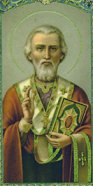 Saint Nicholas (Patron Saint of children, sailors and ships, persons wrongly accused) lived during the 3rd Century AD near the southern coast of what is now known as Turkey. Born to wealthy Christian parents, who died when he was young, he was very religious from an early age and devoted his life entirely to Christianity. He received his ordination as a priest during the years of Christian persecution throughout the Roman Empire (303AD-311AD), and rose in the aftermath of major Christian development to become the Bishop of Myra. Known throughout the land for his generosity to the those in need, his love for children, and his concern for sailors and ships, it is believed Nicholas used his whole inheritance to assist the needy, the sick. Legends attribute his deeds to include physically saving the life of a sailor while at sea, bringing back to life three abused children, and secretly supplying dowery monies for impoverished women by tossing stockings of gold through their windows while they slept. He lived to an old age, and died peacefully in his own bed in 343. The anniversary of his death became a day of celebration throughout the Christian world, St. Nicholas Day.
 The name of Saint Nicholas was brought to North America by its earliest European explorers, from a Viking cathedral in Greenland, to Columbus naming Saint Nicholas Port in Haiti in 1492, and a Spanish settlement in Florida (now known as Jacksonville). Although it is commonly believed the Dutch brought St. Nicholas to New Amsterdam in 1624, colonial Germans in Pennsylvania (1683) did observe the feast of St. Nicholas, and several accounts do have St. Nicholas visiting New York Dutch on New Year's Eve. After the American Revolution, John Pintard, founder of the New York Historical Society in 1804, promoted St. Nicholas as patron saint of both society and city. In January 1809, Washington Irving joined the society and on
 St. Nicholas Day that year he published the satirical fiction, Knickerbocker's History of New York, with numerous references to a jolly St. Nicholas character - not a saintly bishop, rather an elfin Dutch burgher with a clay pipe. Irving's work was regarded as the "first notable work of imagination in the New World." For the first St. Nicholas anniversary dinner of the New York Historical Society in 1810, an artist was commissioned to create the first American image of Nicholas, shown in a gift-giving role with children's treats in stockings hanging at a fireplace. The accompanying poem ends, "Saint Nicholas, my dear good friend! To serve you ever was my end, If you will, now, me something give, I'll serve you ever while I live." But it was in 1823 that the Americanized version of Saint Nicholas became immortalized through a poem titled A Visit from St Nicholas. The name Santa Claus is an Anglesized reconstruction of the Dutch word "Sinterklaas".
 attack on Pearl Harbor, Oahu, HI, launched by 1st Air Fleet of the Imperial Japanese Navy on the morning of Sunday, 7 December 1941at 7am Hawaii Time. The attack destroyed 8 American battleships, severely damaged 9 other warships, destroyed 188 aircraft, and killed 2,403 American servicemen and 68 civilians. The following day, President Roosevelt addressed a joint session of Congress, which declared war on Japan, and firmly drew the United States and its massive industrial and service economy into World War II. In 1952, a plaque mounted on a 10-foot high basalt stone was dedicated to the memory of the American servicemen killed on the USS Arizona, and was the 1st permanent memorial at Pearl Harbor. The USS Arizona Memorial is one of the most recognized and most visited memorials in the United States.
 proposals led to the creation of the International Atomic Energy Agency (IAEA) in 1957, world's center of cooperation in the nuclear field. Headquartered in Vienna, with regional offices in Switzerland, USA, Canada, and Japan, its work is to verify that safeguarded nuclear material and activities are not used for military purposes, help countries to upgrade nuclear safety and security, and to help countries mobilize peaceful applications of nuclear science and technology in energy, environment, health, and agriculture. While it was the intention of President Eisenhower to assure the travesties of atomic bombs were not to be repeated, his proposals did become the rules of engagement for a new kind of warfare, the cold war. Since the global changes of the 1990s, IAEA attention has served to verify the peaceful use or storage of nuclear material, determining the risks posed by the nuclear wastes dumped in the Arctic, and verifying the safety of former nuclear test sites in Central Asia and the Pacific. In recent years, the Agency's focus involves countermeasures against the threat of nuclear terrorism.
 Remembering Flip Wilson
 Remembering Sammy Davis Jr.
 During the early years of computer technology, it was Douglas Engelbart of the Stanford Research Institute who invented the mouse in 1963, a bulky device given its name from the resemblance of early models (which had a cord attached to the rear part of the device) to the common rodent. Modern etymology endorses both computer mice and computer mouses as correct plural forms for computer mouse, although the former appears most often. The ball mouse was developed in 1972 and was the primary form used with personal computers throughout the 1980s and 1990s. As computer technology developed, so did its cursor-management devices. There came to be the mechanical mouse, the laser mouse, inertial mouse, 3D mouse (aka flying mouse), double mouse (to be used by both hands), and tactile mouse (which vibrates when crossing a window boundary). Aside from the implementations of things such as a pointing stick and trackball, portability of smaller computers (such as the laptop) expanded the mouse geneology to include the mini-mouse (for use with laptop computers), footmouse, finger-mouse, eyeball mouse (controlled by the user's retina movements), and a gyroscopic mouse (detecting movement of the mouse as it moves through the air).
 Considered the supreme commendation in the various fields, the Nobel Prizes are awarded annually to people who have completed outstanding research, invented ground-breaking techniques or equipment, or made an outstanding contribution to society in physics, chemistry, literature, peace, medicine or physiology and economics. Prizes cannot be revoked. Since 1974, no award may be made posthumously. The Prizes were instituted by the final will in 1895 of Alfred Nobel, a Swedish chemist and industrialist, who was the inventor of dynamite. Because his work had involved the creation of explosives, and conscious of its military usage, donated 94% of his financial worth (over $4 million USD) "be annually distributed in the form of prizes to those who, during the preceding year, shall have conferred the greatest benefit on mankind." After the establishment of the Nobel Foundation, the first prizes awarded on this date in 1901.
 Remembering Emily Dickinson
 and the Swedish club Hammarby IF. Although sometimes accused of failing to meet the needs of any given global community (slavery in the Sudan), for having political bias (the Israel/Palestine conflicts), and endorsing secular violations (supporting birth control), for over 60 years, UNICEF has globally been the primary authority on aspects of the health and environments of children than any other organization, receiving the Nobel Peace Prize in 1965 and Prince of Asturias Award of Concord in 2006.
 The Convention on the Rights of the Child states every child has the right to express his or her opinion freely and to voice that opinion. It was in 1991 that UNICEF challenged the media and broadcast industry to do more for kids, and with the alliance of the International Council of the National Academy of Television Arts and Sciences, the International Children's Day of Broadcasting (ICDB) began. Celebrated since 1992, the ICDB is a day when broadcasters around the world are encouraged to air quality programming for and about children, and to allow children to be part of the programming process to talk about their hopes and dreams and share information with their peers. The Day has provided governments, broadcasters, communities and children themselves with a powerful opportunity to create not only a better broadcast environment but also a better world for young people. Celebrated on the second Sunday of every December (always between the 8th and the 14th).
 Based on the current Gregorian Calendar, the sequence of the month, day, and year to be the same number only occurrs 12 times per century. Today's date of 12-12-12, is the last time this type of triple digit date will occur until next century on 01-01-2101. There is the additional anomally adding the hour twice on this day, 12/12/12 12:12:12 (at midnight and at noon). The number 12 has been a mystical number across many cultures for thousands of years, and today's date is also surrounded by scientific, astrological spirituality, and ancient predictions, with multitudes of cataclysmic doomsday theories and speculations related to the Mayan Calendar,which ends today, signalling the end of the world 21 December 2012. But according to Sandra Noble, executive director of the Foundation for the Advancement of Mesoamerican Studies, "The 2012 phenomenon is a complete fabrication and a chance for a lot of people to cash in." after 9 days, the true answer was revealed.
 normally used for the first stroke of each hole. The development of the tee was the last major change to the rules of golf, speculated to have been played in one form or another since the 13th Century. The first golf tee patented in 1889 rested flat on the ground and had a raised portion to prop up the ball. Before this, golf balls were teed up on little heaps of sand. The first known tee to pierce the ground was a rubber-topped peg patented in 1892. These new ideas, however, failed to catch on, since most players continued to use heaps of sand. It was during the 1920s when a gadget called the "Reddy Tee" became popular, which was a wooden peg with a convex top, and remains the most commonly used type of golf tee today. A tee is also used in Tee Ball, American football, and rugby.
 The Katzenjammer Kids is a comic strip created by the German immigrant Rudolph Dirks. It debuted on this day in 1897 in the American Humorist, a Sunday supplement of the New York Journal owned by newspaper magnate William Randolph Hearst. The Katzenjammer Kids is today distributed by King Features Syndicate, making it the oldest comic strip still in syndication.
 Remembering Frank Sinatra
 1950s teenage rebellion, which made him a cultural icon of legendary status. His life tragically ended in 1955 at the age of 24, with his enduring fame and popularity resting on only three films, Rebel Without a Cause, East of Eden, and Giant. Dean was originally from Indiana, a scholastically mediocre student. In high school he did successfully play on the baseball and basketball teams, and studied forensics and drama. After enrolling in a Southern California college to study pre-law, he made the decision to transfer to UCLA to major in drama instead. Excelling in Shakespeare, and actively participating in acting workshops, his first big break came when he was cast in a Pepsi commercial in 1950. By October of the following year, he had traveled to New York City to study with Lee Strasberg and a star, as they say, was born.
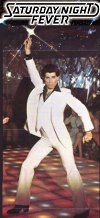 film titled Saturday Night Fever premiered in New York City. The screenplay was loosely based on a 1976 article in New York magazine titled "Tribal Rites of the New Saturday Night". Although British writer Nik Cohn later confessed his story was not factual, the film, starring John Travolta as an unsettling Brooklyn youth who lives for the weekend disco, was a huge global success. The film was not only significant in popularizing disco music, it remains notable for being one of the first instances of cross-media marketing, as its award-winning soundtrack by the Bee Gees rose to be considered one of the greatest albums of all time. A cultural influence considered by some to mark the beginning of a new era, the legacy of Saturday Night Fever has been its immortality shown through parody, including Saturday Night Live's John Belushi with "Samurai Night Fever"; British comedians the Goodies with a "Saturday Night Grease" episode; a parody scene the 1980 film Airplane!; and a Sesame Street music album titled Sesame Street Fever, featuring Grover wearing the white three-piece disco suit in the famous Travolta pose. The actual suit worn by Travolta in the film was sold to the late film critic Gene Siskel at a charity auction for $17,000
 city. Included were Clark Gable and his wife, Carole Lombard, Vivien Leigh with her future husband, Laurence Olivier; Olivia de Havilland, Ann Rutherford, producer David O. Selznick and his wife, and the Atlanta native who authored the story, Margaret Mitchell. The celebrities participated in a motorcade where thousands of fans lined Peachtree Street to see the stars, spent time touring Atlanta, greeting Confederate Civil War veterans at the Old Soldiers Home, met with event planners for a luncheon, offered themselves up to a late afternoon press party, and attended a gala Gone With The Wind costume ball. Friday night, spotlights swept the sky with huge beacons of light. Although it was an ice-cold night, over 300,000 people lined the streets by Loew's Grand Theater to cheer the stars, as well as a group Confederate veterans who were guests of honor. The next day stars of Gone With The Wind were gone to New York, where its premiere was to be held the following week, but left behind memories Atlanta would never forget. President Jimmy Carter would later recall it as "the biggest event to happen in the South in my lifetime."
 Remembering Alan Freed
 On the night of 15 December 1773, a coordinated group of American colonists known as the "Sons of Liberty" boarded 3 British cargo ships anchored in the Boston Harbor with the intent to open 342 crates of tea and dump it into the sea. The act itself was directly related to a dispute with Britain over taxes, and the government-approved monopoly of the British East India Company in the colonies. But, as history shows, it eventually proved to be one of the many causes that led to the American Revolution, because the reaction that followed served to rally support for revolutionaries in the thirteen colonies, who were eventually successful in their fight for independence.
 Remembering Noel Coward
 Wilbur and Orville Wright were very close brothers who, as children, developed an interest in the concept of flight when they received as a gift a toy helicopter. As mechanically-minded adults, in 1892 they opened a bicycle shop (the Wright Cycle Exchange) in Dayton, OH, as a means to fund their continuing interest in the potentials of aeronautics. After years of experimenting with gliders, the brothers made their way to Kitty Hawk, NC in 1900 to begin their manned gliding experiments, and chose the remote location because of its sandy coastal area with regular breezes and soft landing surface. It was in 1903 they built the Wright Flyer, designed and carved their own wooden propellers, and had a purpose-built gasoline engine made by Charlie Taylor in their Dayton bicycle shop. The Flyer cost less than a thousand dollars to construct. After weeks of delays caused by broken propeller shafts, the Wrights finally took to the air on this day in 1903. A coin toss gave the first flight to Orville, recorded at 120 feet in 12 seconds. Two following flights measured 175 and 200 feet, flown by Wilbur and Orville respectively. In the fourth flight that day, Wilbur flew 852 feet in 59 seconds. Their altitude on all flights was about ten feet above the ground. But soon after the last flight, a heavy gust picked up the Flyer and tumbled it end over end, damaging it beyond any hope of quick repair. The brothers shipped the pieces home, and years later Orville restored it, lending it to several U.S. locations for display, then to a British museum, before it was finally installed in the Smithsonian Institution in Washington, DC in 1948, forty-five years to the day after the airplane's only flights.
 Born in St. Louis on this day on 1916 to an over-eager stage mother, Betty Grable worked in Hollywood from the time she was 13, primarily as a dancer and singer. After 10 years of small parts in Hollywood movies, she finally gained national attention on stage for her role in the Cole Porter Broadway hit, Du Barry was a Lady. It was then she signed with 20th Century Fox, to become their top star in a long list of popular films, such as Moon Over Miami (1941), Coney Island (1943), Rosie O'Grady (1943), Pin Up Girl (1944), and her most popular film, Mother Wore Tights (1947). By the end of the 1940s, Grable was the highest-paid female star in Hollywood. Grable was best known for her shapely legs, showcased in all of her Fox musicals, and were famously insured by her studio for $1,000,000 per leg at Lloyd's of London. It was in 1943 she posed for a promotional photograph, taken by studio photographer Frank Powolny, that ended up making her the number one pin-up girl for American soldiers of the WWII era, and included in Life Magazine's 100 Photos that Changed the World.
 A Christmas Carol in Prose, Being a Ghost Story of Christmas is what Charles Dickens described as his "little Christmas book" that was published on this day in 1843 with illustrations by John Leech. The story is a Victorian morality tale of an old and bitter miser who undergoes a profound experience of redemption over the course of one Christmas Eve, and is said to have played a role in redefining the importance of Christmas and the major sentiments associated with the holiday during a time of decline in the old Christmas traditions. It was an instant success, selling over six thousand copies in one week, and A Christmas Carol has become one of the most popular and enduring Christmas stories of all time.
 Evening News in 1923, Ripley's idea proved enormously popular and over the years adapted into a wide variety of formats, including radio, television, a chain of museums, a book series, and a pinball game. The Ripley collection was first displayed at the Chicago World's Fair in 1933, labeled Ripley's Odditorium, and became a huge success touring he country during the years of the Great Depression. In 1950, the first permanent Odditorium opened in Florida. After 90 years in existence, the Ripley collection includes 20,000 photographs, 20,000 artifacts, more than 130,000 cartoon panels, which can be found in Ripley's Believe It or Not! Odditoriums around the world.
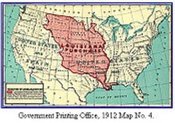 Canada. In 1763, the colony was ceded to the Spanish Empire. but returned to France in 1800. The newly-formed government of the United States recognized the importance of this location to the country's continued security and trade, and under the direction of President Jefferson, began negotiations to purchase the Port of New Orleans from the French, then under the leadership of Napoleon Bonaparte. For financial and political reasons of both parties, the original offer to purchase just the city expanded to include more than 530 million acres of territory, doubling the size of the United States. America paid a total of $27,267,622 in exchange for the Louisiana territory, at the cost of about 3 cents per acre. Congress made temporary provisions for local civil government, authorized the use of military forces to maintain order, and began plans for a mission to explore and chart the territory, which would become known as the Lewis and Clark Expedition the following year.
 On this day in 1913, a British journalist named Arthur Wynne published what he called a "word-cross" (with 32 clues) in the New York World, which is commonly known as the first crossword puzzle. The crossword puzzles became a regular weekly feature in the World, but it was not until 1924 the first crossword puzzle book was published, and began an instant craze in popularity. The term "crossword" appeared in the dictionary in 1930. Today, there are many popular crosswords (including the Cipher crossword, the Diagramless, the Fill-in, and the Crossnumber) distributed in American newspapers and online. The most prestigious (and among the most difficult to solve) are the New York Times crossword puzzles, which have been running continuously since 1942.
 concept of separation of church and state) and was assassinated in by followers of the king in Canterbury Cathedral. After his death, the faithful throughout Europe began claiming him a martyr, and in 1173, he was canonized by Pope Alexander. Originally buried at St. Dunstan's in Canterbury, Becket's remains were relocated to the Trinity Chapel in 1220, the location marked today by a lit candle, and is where modern day archbishops celebrate the Eucharist at this place to commemorate Becket's martyrdom and the translation of his body from his first burial place to the new shrine.
 who is known as the first successfully cloned pet. The research project at the College of Veterinary Medecine at Texas A&M University that produced CC was known as "Operation CopyCat" and was part of a larger project (called Missyplicity) funded by entrepreneur John Sperling (founder of Phoenix and Genetic Savings & Clone, Inc.) because he wanted to clone his favorite dog, Missy. CC was not an exact copy of her mother, a calico domestic shorthair. Her coat is different because the pattern of colors on multicolored animals is determined by events in the womb rather than by genes, and CC's surrogate mother was a tabby. In September 2006, CC gave birth to three kittens who were fathered naturally, which also gave her the status of being the first cloned pet to have given birth. CC shares a comfortable life with one of the scientists who worked on the original project.
 The Lincoln Tunnel is a 1.5 mile long tunnel under the Hudson River connecting New Jersey and the borough of Manhattan in New York City. The tunnel was designed by Ole Singstad for the $75,000,000 project funded by the New Deal's Public Works Administration. Construction began on the first of three tubes in 1934, and opened to traffic on this date in 1937, charging 50 cents per passenger car. Omero C. Catan, a salesman from Manhattan, drove the first car through the tunnel, after waiting in line for 30 hours
 a message to his people in all parts of the world. Today I am doing this to you, who are now my people". She has since delivered the Royal message each Christmas (missing only one), fully televised since 1957. On this date in 1992, after advance copies of the broadcast, scheduled to exclusively air on Christmas Day, had already been distributed by satellite to media organizations, Buckingham Palace announced it "very regrettable" the Sun newspaper had published the complete text of the Queen's five-minute speech two days ahead of schedule. A full investigation began into the unprecedented leak. The Sun's representatives said the paper came by the story by "good, old-fashioned techniques", had not broken any embargoes, and had obtained the information by legal means. Although some suspected a BBC mole, the BBC commented it viewed the leak with concern, and hoped it would not mar the presentation of the Queen's broadcast. Buckingham Palace warned other media organizations against reporting information from the Sun, stating the broadcast as crown copyright libel to infringement.
 Remembering Howard Hughes
 Christianity began as a Jewish sect in the eastern Mediterranean during the mid-1st century, developed most notably under the leadership of Apostles Peter and Paul, and being documented by Christian teachers from the year 150. Its followers endured years of discrimination and persecution until Christianity was legalized in 313 by Constantine I. By 380, it was established as the official religion of the Roman Empire, with outposts extending from Asia Minor to the British Isles, and consequently continued as a prominent force in the future development of Western culture.
 During the years following the American Revolution, as the organization and business of the new nation developed, so too did the celebration of Christmas in the United States begin to develop a character of its own. Traditional festivities exclusively for adults gradually changed to include the children as well through the incorporation of St. Nicholas as an elfin Dutch burgher later known as Santa Claus. Influenced by the publication of a popular poem titled A Visit from St Nicholas, and the little Christmas book of Charles Dickens, A Christmas Carol, the celebration of the season was changed forever.
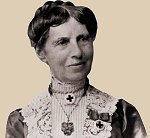 Christmas Day in 1821 in Oxford, Massachusetts, Clara was home-educated, strongly influenced by her sisters and brothers, and inspired to health care through the stories of her great-aunt (a midwife following the Revolutionary War), as well as caring for a bedridden brother for two years when she was age 11. When the American Civil War began, Barton devoted herself to the care of wounded soldiers on the field of battle. Establishing an agency to obtain and distribute supplies to wounded soldiers, she obtained permission to travel behind the lines, and successfully delivered aid to soldiers of both the North and South, working close to the battlefield. In 1865, President Lincoln placed her in charge of the search for the missing men of the Union army, eventually launching her on a nationwide campaign to identify soldiers missing during the Civil War. During an overseas vacation in 1870, she became involved with the International Red Cross and its charter to provide humane services to all victims during wartime. When she returned to the US, she inaugurated a movement to secure recognition of the International Red Cross society by the US government, and succeeded during the administration of President Garfield on the basis that the American Red Cross organization could also be available to respond to other types of crisis. Clara Barton continued to do relief work on the battlefield as an aid until well into her 70s. She went to Cuba with a cargo of supplies in 1898 and spent six weeks, at age 79, on the scene of the Galveston, Texas floods. She resigned from the American Red Cross in 1904 and spent her remaining years in Maryland, where she died in 1912 at the age of 90.
Westminster Abbey, London
Christmas Day in 1821 in Oxford, Massachusetts, Clara was home-educated, strongly influenced by her sisters and brothers, and inspired to health care through the stories of her great-aunt (a midwife following the Revolutionary War), as well as caring for a bedridden brother for two years when she was age 11. When the American Civil War began, Barton devoted herself to the care of wounded soldiers on the field of battle. Establishing an agency to obtain and distribute supplies to wounded soldiers, she obtained permission to travel behind the lines, and successfully delivered aid to soldiers of both the North and South, working close to the battlefield. In 1865, President Lincoln placed her in charge of the search for the missing men of the Union army, eventually launching her on a nationwide campaign to identify soldiers missing during the Civil War. During an overseas vacation in 1870, she became involved with the International Red Cross and its charter to provide humane services to all victims during wartime. When she returned to the US, she inaugurated a movement to secure recognition of the International Red Cross society by the US government, and succeeded during the administration of President Garfield on the basis that the American Red Cross organization could also be available to respond to other types of crisis. Clara Barton continued to do relief work on the battlefield as an aid until well into her 70s. She went to Cuba with a cargo of supplies in 1898 and spent six weeks, at age 79, on the scene of the Galveston, Texas floods. She resigned from the American Red Cross in 1904 and spent her remaining years in Maryland, where she died in 1912 at the age of 90.
Westminster Abbey, London
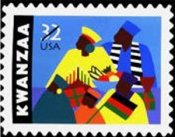 Kwanzaa is a week-long secular holiday, primarily honoring African-American heritage, observed from 26 December to 1 January each year, almost exclusively in the United States. Began in 1966 by the United Slaves Organization (also known as the "US Organization"), this observance was established as a means to help African-Americans reconnect with their African cultural and historical heritage.
 Established in England in 1652, the Friends, later known as Quakers, theologically distinguished themselves through their appreciation of simplicity, honesty, and equality. As many who sought religious freedoms, they emmigrated to the New World. First settling in the colony of Boston, they found themselves facing secular discrimination that admonished severe punishment, including death.
 secured by sprocket holes, and hand cranked to advance through a projector. It was patented in February 1895, and the first footage ever to be recorded using it was taken the following March, showing workers leaving the Lumiere factory. Their first public screening of movies at which admission was charged was held at Paris's Salon Indien du Grand Café on this day in 1895. This history-making presentation featured ten short films, including their first film, Sortie des Usines Lumiere à Lyon (Workers Leaving the Lumiere Factory). All ten films included people in action, from horse trick riders and blacksmiths to a baby's meal, with an average run time of 46 seconds. Although the concept of moving pictures was being developed by many creative inventors of the time, the Grand Café screening is considered to be the true birth of the cinema as a commercial medium. The moving images had an immediate and significant influence on popular culture, and the Lumiere brothers went on a tour of Bombay, London, and New York with the cinématographe in 1896. In an interesting twist of events, the brothers actually believed there was no real future for cinema, and left its pursuit to return their professional interests to color photography. Although dramatically wrong in their judgment of film-making, the Lumiere company was a major producer of photographic products in Europe throughout much of the 20th century. The Lumieres also developed other products, such as a loudspeaker, a medical tool known as homonoid forceps, and a burn ointment.
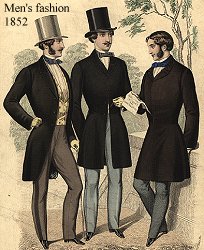 On this day in 1852, a woman named Emma Snodgrass gained certain notoriety when she was discovered strolling around Boston wearing men's clothing. It is not known what prompted her daring adventure to register at the Exchange Hotel under the name of Henry Lewis, then visit the museum, but her unconventional behavior attracted a good deal of attention. As published in the New York Times on 23 March 1853, while she was busy "viewing the architectural beauties of the Exchange, she was requested to view the Second District Station-House and be introduced to Chief Morgan." Although she was reluctant at first to reveal her identity, she did eventually break with the truth and was released.
 In 1786, Charles Macintosh was a 20-year old clerk in Glasgow who left his job to pursue his interests in chemistry. He was very successful in inventing new processes, and was able to obtain the patent for a waterproof material based on cementing together two thicknesses of India-rubber, made soluble by the action of naphtha, one of the by-products of tar. Using the material to design a waterproof raincoat, the first Mackintosh coats were made in the family's textile factory, Charles Macintosh and Co. of Glasgow. Early coats had problems with smell, stiffness, and a tendency to melt in hot weather, although following a corporate merger with the clothing company of Thomas Hancock, these problems were resolved using a method for vulcanizing rubber. The company has continued to make its popular waterproof clothing, collaborating with leading fashion designers, and won a Queen's Award for Enterprise in 2000 for its success in international trade.
 Until 1924, it was believed the Milky Way was the only galaxy. Working from the Mount Wilson Observatory in California, using what was then the world's largest telescope, a 26-year old American astronomer named Edwin Hubble was able to determine the precise size and distance of stars, and determined that some nebulae were actually other galaxies. On this day in 1924, he was preparing to make his discoveries public and announce to the world, at the dawn of the new year, information which would change the view of the universe forever.
 Born in India on this date in 1865, Joseph Rudyard Kipling was a British author and poet, best known for his children's books, including The Jungle Book (1894), and Just So Stories (1902); his novel, Kim (1901); his poems, including Gunga Din (1890); and his many short stories. He is regarded as a major innovator in the art of the short story, and his children's books are enduring literary classics.
 This major social holiday generally involves a party atmosphere until the moment of the transition of the year at midnight. Drinking champagne is a major part of the festivities, as well as the use of fireworks and other noise making. A global celebration beginning in New Zealand (first country over the International Date Line), followed by the celebration in Australia, where Sydney is considered as having the world's best New Year celebrations. Since 1907 in the United States, each year on New Year's Eve celebration in Times Square in New York City, a Ball made of crystal and electric lights is raised to the top of a pole on the One Times Square building and then lowered to mark the coming of the New Year. Over a quarter of a million people go to watch the ball drop each year, and the event is nationally broadcast.